Showing posts with label Non Fiction. Show all posts

Review: The Library Book by Susan Orlean

The Library Book The Library Book by Susan Orlean
My rating: 4 of 5 stars

"In total, four hundred thousand books in Central Library were destroyed in the fire. An additional seven hundred thousand were badly damaged by either smoke or water or, in many cases, both. The number of books destroyed or spoiled was equal to the entirety of fifteen typical branch libraries. It was the greatest loss to any public library in the history of the United States.” 


The Library Book, tells the story of the fire in April of 1986 that damaged or destroyed more than one million books in Los Angeles' Central Library.  It is a sad account to read in the beginning as the author catalogs all that is lost in the fire - the manuscripts , the first editions , the music, and the theater plays recorded in the library that are lost forever. But as I read the book, it also shows the power of books to bring people together and to make a real difference. The book starts with the author first listening about the fire on a tour of the library and she then starts reading more about it. So we get to read about a usual day at the library and what happened on the day of the incident. We get to know of the prime suspect in this case and how the case finally ends. 

The book goes into many tangents - how libraries are run, history of the LA library, its prominent librarians and their contributions to the library, different times when the books were destroyed and burnt as acts of terror or attempt to prove one culture's power over the other. It is like a collection of stories that revolve around books, reading and the growth of LA library from its inception to where it stands today. Along with all this, we also witness some historical lessons and how all systems stand on the shoulders of visionaries who have toiled to make the world a little better. Some of the librarians were inspiring and I felt my admiration for them grow immensely.  

The book might get a little boring in places but then the very next chapter hooks you back to the story. It is not a casual read but it will definitely interest many readers who like to read about books and reading. I had only heard of libraries as a place where we could find books to borrow but before coming to Canada, I never knew what a heaven the library system in Western countries is and how it is a safe community space for all - readers or not.  This book has made me more resolute to build something similar one day in India - even if it starts with a personal library first. 

Here is a youtube video on this fire and the events after that transpired. 

View all my reviews

Trials Of Truth: India's LandMARK Criminal Cases by Pinky Anand


                             Trials of Truth :India's Landmark Cases is a work of non fiction co-written by Pinky Anand, senior advocate at the Supreme Court of India which discusses some of the landmark cases in the history of independent India. The book also attempts to look at the different facets of human criminal mind which might have instigated these gruesome crimes.
                   Nanavati Case, Jessica Lal Murder , Tandoor Murder, the infamous Billa-Ranga Case, Priyadarshini Mattoo Murder, Rajeev Gandhi homicide,Cyanide Mallika, Nithari Killings,Nirbhaya Case,Terrorist attacks of 26/11 all find it's place in this book.Each chapter opens with the author's opinion on the circumstances, the description of the crime itself and it's aftermath.For those readers who are hearing about these cases for the very first time, this book is undoubtedly a must read.
                  The basic problem with this book is that all the cases which are discussed in this work have been in the public domain for quite long and it doesn't help that the book seldom rises above their detailed wikipedia entries which anyone can access free of cost. The author hasn't really tried to give a lawyer's (insider) perspective to these cases either.However as I mentioned before, for the non discerning reader who is perhaps hearing about these cases for the very first time, this one is indeed a must buy.The language is pretty simple and at just about 200 pages or so, this work is not a very lengthy read by any stretch of imagination! I'm giving this a 2.75 out of 5.

-nikhimenon

Cyber Sexy: Rethinking Pornography by Richa Kaul Padte


          Pornography is something which everyone Loves to watch/read but no one openly admits in the public. Richa Kaul Padte's 'Cyber Sexy' is a book on Pornography, a bit 'scientific' one at that. In what can be termed as a nuanced account of the evolution of porn, 'Cyber Sexy' tries to look at the various aspects of 'pleasure'.
         Well, this is the kind of book which is quite difficult to review.Obviously, a somewhat authentic account of the hitory of pornography was what I was hoping for when I picked up this book.But to say that the book entirely lived up to my expectations would be a bit of an overstatement.First and foremost, though the efforts of the author to take up a subject like this for her debut work as an author is laudable, the way it has turned out leaves a lot to be desired.May be a little bit of humour in the narrative might have did the trick.
          The book opens with the writer's first encounter with 'porn' and soon goes on to discuss more serious topics like consent, pornography in literature,exhibitionism,mass intimacy and so on.
          The basic problem which I felt with this book is that though it deals with a topic which is hardly boring, the way it is narrated makes this work of non-fiction quite bland and even uninteresting at times. The book has references about some of the biggest online MMS scandals which shook the country in the early 2000s and later, but it never rises above the numerous discussions happening in the online platforms like reddit and quora on a daily basis. The last couple of chapters delves into consensual porn and non consensual sex. As I mentioned before, the basic problem I felt with the book is the jumbled narrative. Instead of discussing one issue at a time and taking it into it's logical conclusion/ writer's opinion on the same, the debutant author jumps from one thing to the other citing 'experiences' of random people.

On the whole, I'm giving this work a 2.75 out of 5.

-nikhimenon

The Tandoor Murder by Maxwell Periera


              The 'Tandoor Woman' or the 'Tandoor Murder' was undoubtedly one of the most sensational crimes that took the nation by storm in the mid-1990s. Those of you who were born in the late 80 s or the 90 s would definitely remember the news paper reports which gave the sorrid (and quite often pretty much exaggerated) account of the gruesome murder. As a late 80 s kid myself, one of my vivid memories of the nineties pertains to the infamous and much publicized Naina Sahni ('Tandoor') murder case (the other one being the ISRO- espionage/'spy case' including the Maldivian women and the eminent scientists)

            In Tandoor Murder, Maxwell Periera gives a detailed account of this 'crime of passion' and also reconstructs the entire chain of events of the same. An upcoming politician (Sushil Kumar) from the ruling party has a secret love-life (marital life) ,suspects his lover (wife) of infidelity, murders her in a fit of rage only to realize later that he has no means to dispose off the corpse.The cunning manipulator that he is, decides to burn it off in the Tandoor of the restaurant that he owns, with the help of his aid, Keshav. The plan goes awry due to the inadvertent interference by a smart, diligent police constable (Kunju) and from then starts Sushil Kumar's run for cover.How the investigation team nabs him and brings him to the books is what the book is all about.The investigation and the trial process over the years is painstackingly written with great deal of detail and the reader almost feels that he is in the middle of the investigation process.

          The language is pretty simple and Maxwell Periera hasn't gone overboard with his writing. Though he has touched upon a similar case (the infanous Priyadarshini Mattoo Murder Case) and the double standards of the media in one of the closing chapters, the book more or less focuses solely on the Tandoor Case. The book never becomes a boring read and this work of Non Fiction is undoubtedly one of the better books from India this year. 

Verdict: I'm giving the book a 3.5 out of 5.

-nikhimenon


#Review: The whole shebang- sticky bits of being a woman by Lalita Iyer

My rating: 3.5 of 5 stars


The book did not take time to get into the business of why it was written. And. That was something that made reading this so easy and fun. It handled every aspect of being a woman with sensitivity and a lot of humor. I could relate to a lot of the chapters specially live and career and the whole thought process if friends and money. But then, the fun ended too soon for me.

While the book was indeed funny and most times it hit the mark bang on with the analysis and the comparisons , I felt it a little rushed. It started beautifully with some amazing anecdotes and painting a picture of what to expect. But by the end , it felt a little rushed. I would have wanted to dwell a little more on the chapters , perhaps I just enjoyed it too much. I actually laughed out loud while reading this as my husband gave me amused looks.

I will recommend this book to guys more than the ladies so they might have some idea about what goes behind the scenes in the life ofthe women around them or in their life.

View all my reviews

Roomies/Foodies by Lakshmi Ashwin & Meghna chaudhary Joshi


Roomies cookbook is not just for desi folks in foreign lands but it is a bloody good book ( smart name publishers !) for any one who has not cooked much and is going to stay alone. Eating out is never a long term option not to mention the adverse effect on health. Today guys and gals have to know some bit cooking for survival away from home.

In that context too, i felt this book is self sufficient. The authors have not left any thing out of the book. So generous have these ladies been while sharing not just recipes but also substitutes , the ways to pair up the dishes and even how to store them and for how long. The appendix has the ways to prepare basic essentials , the various cooking terms , the common ingredients and even what to carry from india and what is better bought from the place you settle in. This is one of the best book to gift to anyone gong away from mother's or wife's kitchens. Specially to get accustomed with the appendix well in advance so you can soon begin cooking your meals.

 The recipes are easy to follow ( even if you do not use your head much ) , gives you scope to experiment / change as per your taste and very much manageable alone too. This is no fuss , hearty , homely cooking. The stories behind each recipe makes you smile and bond better too.

 I do not have any pic yet to share but I tried 2 of the dishes already and am much happy with the results. More cooking shall happen soon.

  My rating : 4/ 5

#BookReview : Have a little faith by Mitch Albom


From the last 4 years , I have been reading "Tuesdays with Morrie" in the first week of Jan. And being someone too used to rituals, I never tried another book or author. This year God had other plans so I happened to come across this book "have a little faith" by same author.

This is a true story of Mitch's Rabi and their conversations in differed settings over a period of 8 years. In those eight years, Mitch gets a chance to rediscover faith , his roots and also some of the human emotions he had lost touch with. The book also has the story of Henry , a convict turned into Christian pastor. And for me that story was some how more inspiring.

The book no where wants you to believe in God but more than that it makes you aware of the ways we have tied our self to meaningless pursuits and how our joys are always linked to what and how much we give back to others. It is a lot of stuff you already know but put in context of real people - people who are flawed yet the goodness survives even today.

When i started, I was not aware of the reasons this book was my first read of 2016 but once I was done with about half, I knew that like Mitch this was my chance to re discover my faith and define my actions going forward 'cause

Faith is about doing. It is how you act , not what you believe. 

I personally liked this book though many sceptical readers might not enjoy it as much. Still this one I feel has something for all of us.

My rating : 4/5

Here's wishing you a glorious year in all you do and read. Bless you !  

The Old Man and his God, by Sudha Murty — a review

Travel brings us experiences. Experiences bring observations on life. And we realize that life may not be as simple as we thought, or maybe it is. Sudha Murty, on her travels, records what people say to her. Their accounts on life and its meaning are put in this book for us to savor.

What she does so wonderfully well as usual is that she narrates without making things complicated. It’s simple in language and style, and very direct. It feels even like they are diary entries, and in a way, they are. The title story, The Old Man and his God looks to bring out the simple needs of an old, blind priest who Sudha Murty finds at a small temple. It brings out that money might not be everything to everyone. The Way You Look at It, the story brings about a look at perspectives. What one person found useful, the other didn’t. The Tale of Two Brothers touched a chord. It showed being related by blood isn’t important as long as you are intrigued by the heart, by love. These were some of my favorites from the book.

Do I agree with how she interprets the observations? Not always, no. But then again, she looks at it one way, and the way I look at the incident would be different after all.

The book is not just enjoyable to read, but also, inspiring with some of the stories in it. I rate it 3.5 or 4 stars.

Rated: 4 stars
Source: Library Copy
Reviewed by: Vinay Leo R.

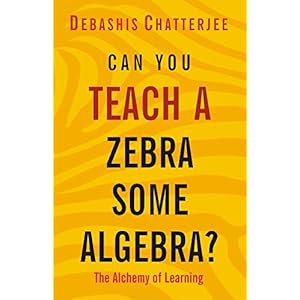
#BookReview : Can you teach a Zebra some Algebra by Debashish Chatterjee

In Can You Teach a Zebra Some Algebra? Debashis writes about the age-old system of education in India. In the current education system, teachers mainly focus on providing knowledge to students instead of focusing on the real subject in hand – the student. Our present day schools churn out students who have minimum working knowledge of everything with no deep knowledge of anything. The author writes about the need for achieving mastery in what we like and are passionate about.

Nimue Says : I got this book about 3 weeks back and looking at the size , I was sure I can finish this book in 5-7 days but it actually took me more than 15 days to finish this. And the reason is that book is not something you can read in few sittings and be done with it. the various chapters , though small have a lot of lesson and inspiration for everyone - teachers , students , managers and any leader. 


One story that I have passed to almost everyone around me is about two teachers who are asked to teach some impossible to teach kids. The better of the two is one who returns without teaching but he learns something from each of the three students. 


This one story has impacted me that I feel the learner in me has been revived after ages. Going through the routines of life , we forget to be curious or aware of things around. And we forget that we are always in the position of being teacher and a student at any moment. This book in all its subtlety is a powerful medium to remind the reader how to mend our ways with students , our children or any one we are responsible to teach. 

I reccomend this book to everyone. The book has its own weak areas but the mrssage it has passed is more important. During the recent discussions with a few of my juniors I found new perspective and lessons to pass on as I was reading this book. And that really is the worth of this book.

My rating : 3.5/5

Governance for Growth in India by Apj Abdul Kalam

Former President, Scientist, Technocrat and a thinker – Dr. APJ Adbul Kalam does not need any introduction. There are chances that if I start words of praise this book review will need to be written in another post. In Governance for Growth in India Kalam has vividly explained the aspects of governance from his knowledge, experience and suggestions. Kalam has outlined ideas for removing corruption, fixing governance and identifying accountability, which are root for all the present chaos in India. I think this book can be used as a roadmap for development for positive changes in India. This book was suggested to me by my wife ( who is the admin if the page too) , as she knows my interest for political discourse and development debates (Mostly armchair kinds). The introduction text in the back cover. “As India chooses its 16th Lok Sabha in 2014, and voters across the country are debating and discussing matters related to governance and elections, this book, from someone who has observed our national life at close quarters, is a visionary statement for every citizen to read and understand” was enough to grab my attention. Kalam, a great visionary has written this book in very practical style focusing ideas to improve development and governance in India.
The introduction starts with his recent visit to Punjab where he is interacting with a group of Young people and aswering their doubts. His answers show the true character of Dr. Kalam, and why we all have high respect for him. After the introduction the book takes us to the knowledge and overall experience of Dr. Kalam. In this book, Dr. Kalam not only hopes but believes that young Indians can change the bleak politics and politicans. He advises the government representatives to apply / follow the concept of creative leadership rather than falling into conventional methods of governance. He outlines the need of incorporating new, creative ideas and quick decision making process. This book is not only memoir, roadmap but also filled with lively examples ranging from different fields of Dr. Kalam’s experience. These examples, make the book more interesting. This book covers every possible topic related to development of the country ranging from corruption to improving defense missions. He has suggested many ideas to Election Commission too for trasparent and fair elections.

Why to read this book ? If you want to change or want to be part of change in the country you must read this book. This book will give you hope.

Why not to read this book ?
If you hate change or to be changed.

I think this is a brilliant book, should be read by every concerned citizen of India.

Chanakya's 7 Secrets of Leadership by Radhakrishnan Pillai & D Sivanandhan


Strategy is a very important quality of any good leader. But what are the secrets to leadership? Chanakya, in his Arthashastra, had a concept called Saptanga, the seven pillars of any kingdom. In this book, author Radhakrishnan Pillai delves into the saptanga with the example of Sivanandan, former DGP of Maharashtra and in his eyes, the archetype of an able administrator and one of India’s most respected police officers.

I’ll say one thing about the book. It’s very organized and easy to understand. When it comes to any kind of non-fiction, it is important that the book’s language not have too much jargon that only a particular set of people will understand. The authors say at the start that the book is kept simple, and I felt that was true. The book is covered in sections and each section is detailed. It’s pretty useful for many of us.

The thing about any book is that there will be a reader who loves the genre, and some who cannot digest it as easily. When it comes to non-fiction books, I’m most of the times part of the latter kind. It is because of this personal preference that I didn’t enjoy the book as much, and that I am not going to offer suggestions for improvement. I would say that this book might be helpful in slowly adding some qualities of a good leader into our character.

About the authors:
Radhakrishnan Pillai is the Founder-Director of the Chanakya Institute of Public leadership (CIPL). He has represented India in various national and international conferences and has taught at educational institutes in Germany (Heidelberg, Cologne), UK (Oxford, Cambridge) and India (IIT, IIM and IISc).

D. Sivanandhan is a former Director General of Police, Maharashtra, and one of India’s most highly regarded IPS officers. He has been instrumental in rebuilding the defenses of Mumbai after attacks in November 2008 and has served as member of the special task force in the National Security Council Secretariat.


Book Details:
Title: Chanakya’s 7 Secrets of Leadership
Series: N/a
Author: Radhakrishnan Pillai, D Sivanandhan
Genre: Non-fiction
ISBN/ASIN: 9788184954012
Publisher: Jaico
Price: INR. 299


Reviewed by Leo, for Jaico Books.

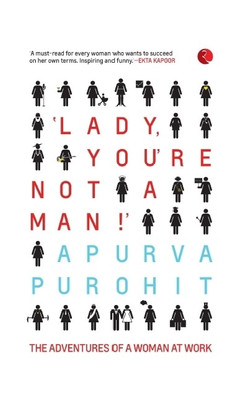
Lady You are not a Man by Apurva Purohit

Today's woman wants to make a success of both family and career and is unwilling to compromise on either. But the burden of coping with deadlines, recalcitrant children, lazy husbands, difficult bosses and equally difficult in-laws can be daunting, even overwhelming. In this book, Apurva Purohit, CEO of Radio City 91.1 FM, shows how women can accept, adapt and achieve their way to the highest rung in every arena. Through real-life stories and funny anecdotes, she provides pithy tips on a multitude of topics: from training husbands to training interns, from the right attitude to getting it right with kids, from dealing with household crises to office emergencies, from building a reputation to paving ones way to the top. Warm, witty and empathetic, Lady, You're Not a Man! is a must-read for every woman on the quest for work-home balance and determined to succeed in her career and live a happy and fulfilling life.

Nimue Says : There was a time I was sceptical of such titles , not 'cause I doubted the content or the intention but mostly due to the fact that most of such books were too preachy. NOT THIS ONE. 

The book drives home one very important lesson , the title : Lady , You are NOT a Man. And as much one tries hard , we can not be like them. Which Apurva shows is to our own benefit. 

There are all sort of women around us and every one of them can teach us a lot - either by showing what to do or what not to do in our life. The Chandni - Chameli analogy or be it the strict boss who was portrayed as devil/monster by the employee who did not want to work hard but hide her flaws , Be it the funny anecdotes from her life or the lessons learned from others , be it ones in-laws or the boss or the matters of pregnancy and children that each one of us have to face at some time , I will never forget Apurva's bottom line at the end of such chapters - One can blame these factors or other people only to some extent. Ultimately it all depends on your will and hard work that will take you ahead. 

One can not spend life regretting or begrudging others for lost opportunities or the sacrifices you make. It was your decision and one should live them proudly.

This book is a wonderful journey , well shared for all - men and women alike. 

It has made me a bit more glad about what I do and way I manage my life today.
It also helped me be aware that inspite all that comes , I can win over the situations with time.

Rating : 4/5


The Prayer of the Frog, Vol 2. by Fr. Anthony de Mello


About the author:

Father Anthony “Tony” de Mello was a Jesuit priest and psychotherapist who became widely known for his books on spirituality. An internationally acclaimed spiritual guide, writer and public speaker, de Mello hosted many spiritual conferences.

My thoughts:
Usually, non-fiction genre and my bookshelf are miles apart, but of late, more seem to be finding their way into it. The latest acquisitions, courtesy my local library, were two books on spiritualism, by Fr. Anthony de Mello.

Books on spiritualism are to be read slowly, they say. I understand that, and I’ve taken it as slow as I can. The book continues the wisdom of Volume 1.

Education should not be a preparation for life; it should be life. I think that has been one of the best quotes I have read. And the example used to illustrate it has been worth it as well. It was something I could relate to as a writer. The words expressed, for being a writer, you should just go write, not prepare for writing.

Another witty lesson was the one with the girl and the banana peel. It was humorous, but also showed that not all things can come back once gone, and we shouldn't fret on it.

All of us want to live atleast another day. This was illustrated by the story of the man who saved another year of his life by promising to make a horse fly!

But the one I liked the most was the idea that our walls are only mental, not physical. A bear in a cage paced up and down the twenty feet of the cage length. Even after the cage was removed years later, it continued pacing just that twenty feet. It showed that once we are fearful or trapped, the effect might linger longer than we think.

Once again, I'd recommend the read, but it is not to be absorbed at once. A slow read would best be suited.


Book details:
Title: The Prayer of the Frog Volume 2
Author: Fr. Anthony de Mello
ISBN: 9788187886266
Genre: Non-fiction, Spiritualism
Publishers: Gujarat Sahitya Prakash


Reviewed by Leo

Shared with

  1. Indian Quills at The Tales Pensieve


The Prayer of the Frog, Vol 1. by Fr. Anthony de Mello


About the author:
Father Anthony “Tony” de Mello was a Jesuit priest and psychotherapist who became widely known for his books on spirituality. An internationally acclaimed spiritual guide, writer and public speaker, de Mello hosted many spiritual conferences.

My thoughts:
Usually, non-fiction genre and my bookshelf are miles apart, but of late, more seem to be finding their way into it. The latest acquisitions, courtesy my local library, were two books on spiritualism, by Fr. Anthony de Mello.

Books on spiritualism are to be read slowly, they say. I understand that, and I’ve taken it as slow as I can. The book is divided into eight parts.

My favorite part is the one where Sage Narada’s arrogance is punctured by Lord Vishnu. It showed that even when we are most busy, and occupied with our lives, if we invoke God, then God will hear us. That God knows we love him.

The second part is Awareness, wherein the part about “evident” was something that was thought provoking. In our life, we often express our opinion even when it is not needed. Sometimes we are right, sometimes not. This part showed in a different way, that what is evident to us may not be the truth always.

Another story is the story of belief. Most of us do believe in God, at least as a universal entity, if not by one name or religion. The story of Providence shows us belief in a different sense. It is the story of a priest who believed that God will save him, and refused to be saved by three rescue boats when a dam burst and his town was flooded. When on reaching Heaven, he asked God about why He didn’t come to save him, God replied that He did send three rescue boats. He always sends his grace and blessings, but we should understand that it might not be in a way that we expect it to be.

I could share my thoughts on many such gems of wisdom in this book, but then, the post would end up a mile long. If you chance upon this book, my suggestion would be to read it slowly, and let the meaning find you, rather than you finding the meaning. It might not come on the first read, or even the second. But it is a search that is worth doing I feel.


Book details:
Title: The Prayer of the Frog Volume 1
Author: Fr. Anthony de Mello
ISBN: 9788187886259
Genre: Non-fiction, Spiritualism
Publishers: Gujarat Sahitya Prakash


Reviewed by Leo

Shared with

  1. First Reads at b00k r3vi3ws
  2. Indian Quills at The Tales Pensieve


Home Remedies, by T.V. Sairam


About the author:
T. V. Sairam, a senior member of the civil services, holds a master’s degree in botany and a doctorate in alternative medicine. For the past three decades, he has been gathering and documenting data relating to the household use of medicinal plants.

My thoughts on the book:
I remember about a year or two back, my colleague gave me a set of essays to mark and rate for an inter-school competition. The topic for that was Grandma’s Home Remedies. It was fun to read the various takes on the topic, and some of them were not only well presented, but well written, so much that I could find myself thinking of these remedies that my grandmother had shared with and tried on me when I got the ailments. I’m sure you can too, right? Salt for mouth ulcers, or jeera for digestion, I think at one time or another, most of us might have heard these age-old remedies.

This book is almost an encyclopedia of how to use these medicinal plants which are quite easily known or identifiable. Plants like mango or lemon which are easily obtainable are given here. Each plant may have lots of uses in various ailments, like pimples or swelling, and bigger stuff like obesity and diabetes. They are very systematically arranged and indexed in the book for easy use.

When I chanced upon this book at my local library, I was immediately attracted to it. There are parts at the very beginning of the book on “How to use the book”, “How to prepare it” etc. So I urge any readers to go through those parts carefully, or if still doubtful, consult a physician before trying anything out. After all, a remedy not taken or administered correctly could lead to more complications. I’m just a reader, not a doctor!


Book details:
Title: Home Remedies – A Handbook of Herbal Cures for Common Ailments
Author: T. V. Sairam
Genre: Non-fiction/Medical
ISBN: 978-0140-277-09-8
Publishers: Penguin Publishers
Price: INR. 250


Reviewed by Leo

Shared with

  1. First Reads at b00k r3vi3ws
  2. Indian Quills at The Tales Pensieve


Wise and Otherwise, by Sudha Murty


About the author:
Sudha Murty was born in 1950 in Shiggaon in north Karnataka. A prolific writer in English and Kannada, she has written nine novels, four technical books, three travelogues, one collection of short stories, three collections of non-fiction pieces and two books for children. Her books have been translated into all the major Indian languages and have sold over three lakh copies around the country. She was the recipient of the R.K. Narayan’s Award for Literature and the Padma Shri in 2006.

My thoughts on the book:
Life is a strange package at times. It is not strange because of its failures or successes, tears or smiles but because of people. In life’s journey, we come across different kinds of people, who make us stop and think about that strangeness. This book shows us some of these people, the incidents that Sudha has experienced in her trips as a social worker and brings to us fifty short vignettes of such witty and sometimes thought provoking incidents.

Human foibles like boasting of things we haven’t done when we have things to actually boast about, sticking to rules that were advised to us by those who have had experience of the same, or honesty from a heart that is innocent and grateful for things that have gone it’s way, each of these vignettes have something to say, something to make us wonder, and even sometimes touch our heart. There’s a tale of a girl who was sold by the boy he adored the most, her brother, and a tale of an uneducated woman being more sensible than an educated man. She brings out wit with an incident where a telegram worded the wrong way became a funny trouble and poignancy with the tale of a family who moved on after a death because the death made their life easier.

Read this book for it is a passage through human behavior, and infinite wisdom in thought and experience.


My rating: 4 stars

Book details:
Title: Wise and Otherwise
Author: Sudha Murty
Genre: Non-Fiction/Inspirational
ISBN: 9780143062226
Publishers: Penguin Books
Price: INR. 250


Reviewed by Leo

Shared with Indian Quills Reading Challenge at The Tales Pensieve.


Sex and the Citadel by Shireen El Feki


With my aesthetic preferences, my world is often only made of pretty things like fashion, poetry, art, chocolate, literature and such. My mind conveniently filters out the grime that coats out daily lives. I stopped reading the newspaper for the lack of time, but I find myself happier for it. On social media, my eyes are unseeing of the steady stream of outrage on the state of this country. I bullishly swim upstream, spouting poetic lines when everyone else is talking about rape and murder and mayhem.

So It helps to pepper ones reading list with hard-hitting non-fiction books to bring one back to ground realities from time to time. I like my share of 'real life' in measured doses - in books like Sex and the Citadel by Shireen El Feki.

Feki, who is an award-winning journalist, a writer, broadcaster, an academic, the vice chair of UN's Global Commission on HIV and the Law and a TED Global Fellow. With extensive experience in the field of sexual health, Feki writes this commentary on the sociosexual life in the Arab world with great insight and authority. The book is not only an excellent social commentary on the contemporary Muslim world but also an eye opener on many subjects apart from the sexual. The author's Islamic background and her Western upbringing puts her at an great vantage point and makes her writing credible.

'Sex and the Citadel' is divided into many clear chapters pertaining to sexual issues. The first chapter gives the reader an overview of the the Arab society's stance on all matters sexual. It is surprising to learn that there was once a fairly liberal system in place where practices like homosexuality, and even prostitution were not just tolerated but considered normal. Feki cites several literary instances that have spoken explicitly on sex and its many possibilities. Following political upheavals in the late 1800s, the Arab world's stance on sexuality changed, thanks to the likes of Hassan Al Banna and Sayyid Qutb. These men blamed Egypt's decline to Western culture and turned to Sharia laws to revive the region's Islamist glory. And that was the beginning of the downward spiral.

One can't help but be reminded one of the India that once produced Kama Sutra and erotic temple art of Khajuraho and in time turned into a land of prudes due to religious and political influences.

The next chapter, titled 'Desperate Housewives' is one of the longest in the book deals with the plight of the average niqab'd or hijab'd Arab housewife, who has little or no say in the bedroom or outside it. The problems for the girl child begin early on with customs like female circumcision, and only multiply with practices like the very public test of virginity, limited access to legal aid or medical care with regards contraception, pregnancy or abortion. Feki interviews many 'regular' people through the course of this book to understand the nature of the sexual problems that plague the country. She also speaks to a few firebrand women who are slowly but surely challenging the norms and helping lend voice to the otherwise silent Arab woman.

The third chapter is titled 'Sex and the Single Arab' and boldly discusses the biggest of all hush hush subjects - premarital sex. Feki speaks of the lengths to which single women go to preserve their virginity and the sexual frustration of young men who do not have the resources to marry among other things. One interesting thing I learnt from this chapter was that in Islam, there are various kinds of marriage. Many single people in love opt for a relatively hassle-free form of marriage called Urfi so they may have sex with some form of religious sanction and thus a clear conscience. 'Proper' marriages are, of course, the kind that is solemnised before the court, a religious representative and the community.

'Facts of Life', the fourth chapter illuminates the reader on the sad state of sexual education (which is pretty much the case everywhere), the depiction of sex in film and the media, the general misconceptions and taboos surrounding sex and a handful of brave men ad women challenging this state of affairs with the help of new age media. Feki also discusses how access to the Internet has significantly changed attitudes about sex among youngsters, even if this attitudinal shift is not easy to see.

The fifth chapter is dedicated to the business of flesh, aptly titled 'Sex for Sale'. Though officially illegal, prostitution manages to thrive in dark discreet alleys in Egypt and its neighbouring nations. Like in most nations of the world, most women are pushed into prostitution for financial necessity. It reflects the sad plight of women in the Arab world who have little recourse to a 'normal' and respectable life due to limited education and job opportunities. Feki also throws in bits about activism in this area as she is wont to do in all chapters.

In 'Dare to be Different', the author brings to light a marginalised community in not just the Arab world, but everywhere - transgenders. The chapter talks about the struggle of these people in accessing surgical and hormonal treatments in the first place, and then acceptance.

'Come the Revolution' sums up the contents of the book beautifully, and if you do not have the patience to read the whole book (it can seem boring and lengthy at times), read at least this one. Feki acknowledges how the revolution at Tahrir Square changed the old world order in Egypt forever, and how it will hopefully bring positive changes in the Arab world. Egypt's second wave of mass protests are being held even as I write this review. As Feki's brave work predicts, Arab's social soil is ready to be sown with the seeds of change.

Author: Shireen El Feki
Publisher: Random House
Copy source: Publisher
ISBN: 9780701183165
Binding: Paperback
No. of pages: 293 + notes and glossary
RATING: 4/5


Review: Iliana Xander's 'Love Mom'

  Iliana Xander is making waves globally in the crime fiction genre, and much like Freida Mcfadden and Coolen Hoover (though she is more int...