Showing posts with label Leo. Show all posts

The Muse by Pratibha Pandey

Sometimes, for any bibliophile, a single short story can be a wonderful getaway after long books. At least, I'd like to believe so. Having read Pratibha's work since years before this short story was released, I can honestly say that I was actually looking forward to reading this!

When the "book" itself is only 18 pages, it's a bit hard to write a detailed review without giving away spoilers. The story is the interaction between two friends, one of whom is a poet who finds The Muse. Reading it brought a smile, and I suppose that's the biggest positive a story can get. It makes the reader happy. The friendship is portrayed that beautifully you see.

I wish P had made it a part of a bigger collection, because after finishing the read in under half an hour, one does feel like reading more from her. Oh well. Maybe next time, eh?


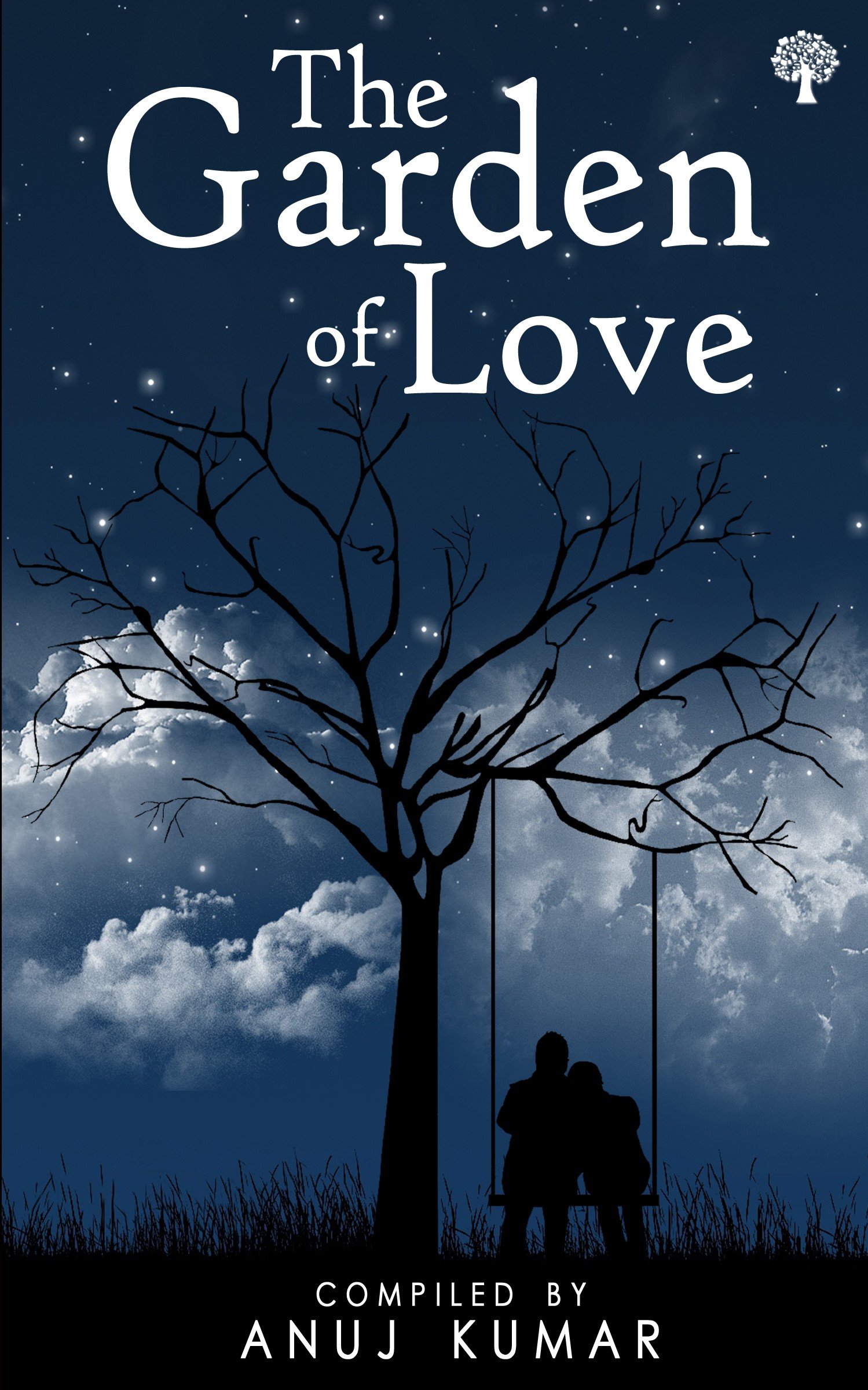
The Garden of Love, edited by Anuj Kumar


They say any person who has fallen in love, and felt its joys and its pangs, will turn into a poet. Not all poems need to be written though. This collection has 40 poems under the umbrella of love and its various shades. These 40 poems come from the pen of 4 poets as well, so they add their own hues to the poems.

How each reader reads and interprets poetry is different. Some might see depth in simplicity, some will see simplicity in depth. It's quite difficult to review poetry for this reason. If I were to pick up a few poems as favorite from this collection, it would be these...

Of Anuj Kumar's ten poems, I liked Jar of Hearts the best. The poem has the emotion of heartbreak penned down nicely. It's something that many would be able to relate to, I feel, even if the he and she in the poem were interchanged.

The poem titled Yes, I Will is my favorite from the poems penned by Maliny Mohan. The rhyme doesn't seem forced and the flow from line to line is beautiful, just like the happy emotions of love, one that seems forever, that that poem talks of.

Akash Deep Gupta's verses are longer than that of the other three poets. Yet the poem I like the best from his 10 verses would probably be his shortest. One Day portrays a love that remains the same no matter what changes. I liked that portrayal.

From Abhijeet Singh Yadav's poems, perhaps the one I remember is The Text. I leave you to read it interpret, but I thought it could be interpreted at least a couple of different ways.

I like the concept of the book. Love is an emotion that has both a good side and a bad one. And to split the book into poems that relate to both was quite nice. There are some things that didn't work from my perspective. The first is that there were missing letters from the poem titles. Perhaps I got a bad print, I'm not sure. Second, there wasn't a demarcation between the sections of each poet, so I didn't whose poem I was reading. Thirdly, some of the poems, the rhyme felt forced, or the words out of place. Apart from a few poems, I don't think there were poems that wowed me.

I liked the title of the book, and the cover art that went with that title well. And there were definitely few poems that I liked a lot. Like I said earlier, each reader interprets poetry differently, so I do feel the collection would appeal to other readers more than it did to me.


A Perfect Murder and Other Stories, by S. R. Nair


There’s a charm to short stories that novels may not always have. It expresses a tale in very few words, and to make sure no threads are left hanging is a challenge. I took this set of short stories as I felt that the collection would give me a welcome change from reading novels. The title A Perfect Murder also appealed to the crime fiction lover in me.

Perhaps it was the title, but I began reading with the assumption that it was a collection of short stories in the crime fiction genre (which is rare). The book has fourteen short stories, but they don’t stick to a particular genre. From the fourteen, there were few favorites, and there were stories that didn’t appeal to me as much.

My favorite story from the collection was iPad. The story is perhaps the shortest one in the book, but it ranks right at the top because of the emotional ending. That the ending was also quite unexpected only added to the quality of the piece.

Salma’s Fate is another story I liked. There might be a Salma we know or whose story we may have read in the news. But this story, thankfully, has a positive twist to it instead of a negative one.

The story Visa for America felt familiar, like I had read it before somewhere. But it ended unlike how I thought it would. The love story still had a chance for a happy ending, and I was thankful for that.

Other stories that I liked were The Soothsayer, The Grandson, and Seema.

The stories not only cover a variety of genres, but also many themes that are quite common to see. There’s a mother-in-law who wants a grandson, and doesn’t accept the granddaughter though she had daughters of her own too. There’s a man who divorces his wife over the phone because she went against his father. There’s a lovelorn man who still wants to be with the old “crush” even though he’s married. These are characters that seem familiar or real. The author puts each story across quite well.

I like stories that leave something to the imagination. But most of the stories here had an enormous amount of detail. Though that helped to bring the scene to life, it didn’t quite manage to engage me as a reader. The title story, I felt, was a bit too long (though a perfect murder would need planning, I suppose). There aren’t many twists either. You know what might happen, and more often than not, that happens.

I’d read the collection to enjoy some simple, almost realistic stories. It’s a one-time read, but not a quick read. I took longer than I thought I would to finish it. 

I thank the author for sending me a copy to peruse and review.

Book Review: The BFG, by Roald Dahl


When I read books that have been adapted into movies, inadvertently, I check to see if the movie is as good as the book. In the case of this one, the BFG by Roald Dahl, I felt the book held more promise than the movie (which is the case more often than not anyway).

The BFG (Big Friendly Giant) is a story about an orphan named Sophie who sees a giant during the witching hour. This leads the giant to capture her and take her to Giant Country, far away from the eyes of other human beings. This giant (BFG) lives in a cave, is the only friendly giant (who doesn't eat humans), is shorter than the other giants and thus oppressed by them. He also blows dreams into the ears of children. The book, you could say, is Sophie's adventure with the BFG, and how the two of them manage to tame the other giants and such.

I don't know about the movie, but I had fun reading the book. The funny language of the BFG (though one does need time to get used to it), his manner of talking or his giant ears, how friendly he is with Sophie... all that felt right for a children's book. It was also nice to read about some of the dreams. A couple of them felt familiar, so innocent, yet that's what we would have dreamt when we were children. I don't know how much I like the character of Sophie, or the other characters either. Some quotes in the book felt true, whereas others felt unnecessary to add to the humor that was already there.

Would I read it again? Maybe not. I would read other books from Dahl to see if they are better, or indeed, if this one felt great because it was the first time I read a Dahl book.

Reviewed by Vinay Leo R. No payment was taken for this review; these are the unbiased and uninfluenced thoughts of the reviewer about the book.

Book Review: Angry River by Ruskin Bond


I love short stories. They are perfect to read after those heavy reads that take a lot out of me as a reader. On that front, I think Ruskin Bond’s books excel. I admire the author a lot for his simplicity. I found this book at the library and just the title alone made me wonder what it had in store.

Angry River shares the story of Sita, her small family consisting of her grandmother and grandfather, and their life on an island at the middle of the big river. The river floods when her grandparents aren’t around, leaving Sita in a dilemma.

The story, I feel, is one about hope and faith. Sita’s seemingly simple and happy life is disrupted by the flood, but the girl, who has grown up near the river and hearing of its tale from the grandparents, continues to be hopeful. She tries to survive, rather than get panicked. The story, on its face, is a simple one. There aren’t any unexpected twists and turns, and neither does the storyline call for one. It’s engaging in its brevity too. There are just four or five characters through the story, but the focus is the young girl and her struggle during the flood. Her innocence is well portrayed, as is the fact that the stories she has heard is from her grandmother. This in turn is reflected in her imagination. I remember the stories of Krishna, Sita and others from Indian mythology being shared with me by my grandmother as I was growing up. It’s the same with Sita, and that is something beautiful.

This book is a quick read, and a beautiful one. I would definitely read it again, even if just to take a break from the longer length stories/novels around.

Reviewed by Vinay Leo R. No payment was taken for this review; these are the unbiased and uninfluenced thoughts of the reviewer about the book.

Unanswered, by Kunal Uniyal

Life is all about questions and answers. When in our journey, we don't seem to find an answer, we invoke the almighty and put the question to him, see if he can give us the answer, or better yet, help us to find the answers within ourselves. That is a part of spirituality that I admire. And to me, that's partly the path that this book "Unanswered" takes. The book is the poet's contemplation on life, and these questions, and at times, the answers that he finds to these questions.


How one looks at different aspects or characteristics of life varies with each person. Through this book of poetry and philosophy, the poet looks at and discusses on topics like death, immortality, morality, dharma, ego etc. He seeks answers for these in the pages of spiritual and religious texts like the Bhagwad Gita, and enlightens us on what they say about these. And in his own style, he makes us think on those topics as well. Something that I noted down in particular was a quote from Bertrand Russell that I hadn't come across before: "It is the preoccupation with possessions, more than anything else that prevents us from living freely and nobly." I don't quite feel the poet or Russell talks of the very human yearning for something, but it's an obsession that we seem to have for something materialistic that kills peace. And another aspect of this book I could relate to was the contemplation on prayers, for they are something that's very common to mankind, not just a religion.

Poetry cannot really be reviewed, I feel. One can only review or state what one finds or understands in the poem. It is an interpretation of the reader. If it matches the intent of the poet, the joy is more. If not, it doesn't mean that the poet or the reader has failed. The poet here shares many of his verses, but perhaps the one that stands out to me is the very first. What I can relate to is what will be memorable, after all. The poem, titled "You and I" questions and seeks the almighty, and queries if we, or the poet, can see Him in his form, that if He is everywhere and in everything, can He, for some moments, be ours and only ours. I've felt that often. More so, it reminded me of Hiranyakashipu, who wanted to see if God was in a pillar, though not with the same emotions.

There is depth, I accept, in this collection of Capt. Uniyal's thoughts. And it is warranted. But it might still be a bit heavy for most readers, with the vocabulary especially not helping to keep my attention on the prose. But it is worth diving into, and it is appreciable.

I like the book for the most part, but it doesn't engage me a lot. So I rate it 3.5 stars. Best wishes to the author for his future books.

Reviewed by Vinay Leo R. for the author, who gave a copy of the eBook.

Jonathan Livingston Seagull, by Richard Bach

Books that talk on life are interesting, and there are many that help inspire us to look at life in a different way too. I came to know of this book from a friend, and the way she put it across, it felt very interesting. So I took it up to read.

Jonathan Livingston Seagull is one who stands out from the colony of seagulls and their usual way, their habits. He's not welcomed when he does that, or when he questions the norms, and is eventually thrown out of the colony. But that doesn't break his willpower or change his attitude. He continues to aspire, taking the hardships that come in his stride. He continues to challenge the boundaries that the gulls have been taught to keep within. Eventually, he returns to near the flock, and finds more and more gulls willing to break the boundaries, and learn from what he has to share.

What I loved in the book is that teaching, that we don't have to be part of the crowd, that it is okay to question, that we shouldn't be dejected when we are chastised for that and continue to aspire. There are beautiful photos as well to add to the story. However, I felt the book, as it progressed, became more preachy than teachy. And that kind of doused the interest a little.

An interesting book which I'll look at when a little inspiration is needed. I rate it 3 stars.

Romantic Bouncers, by Ram Vignesh

I've read books where cricket and the genre are mixed, and not come out well. The impression that Ram Vignesh's Romantic Bouncers gave from the blurb was that it would be worth the read. It promised not just a story in the cricketing world, but also a romance and a thriller. A small part of me still wondered if mixing so many aspects would muddle the story and the impact that it makes.

Rabin is an aspiring cricketer. His dream is to be part of the Indian National team. As is the dream of his best friend Sarath. But they know that's not going to be easy. The romance angle brings in Kristina, who studies in the same college. Any aspiration of such levels usually has an antagonist. That is his father. And such a dream will also a silent supporter, who is Bharaga. The story follows the aspiration of Rabin, and the journey towards that, while bringing twists and other characters into and around that.

The mix of so many things - romance, mystery, family drama, cricket etc. - would usually be a bit difficult to read, and to be honest, at times, it does feel like that, but the narration is steady, in a simple language, and doesn't make that feeling last long. I liked the characters what Ram Vignesh brings, especially the silent supporter Bharaga and of course Rabin, the main protagonist. It has enough essence to keep the reader engaged.

I'm slightly miffed that though characters were introduced well, two of them did not quite appeal to me. Kristina's character in the book doesn't work that well, and probably because she's shown as dead first, and then the reader taken back in time. And, though I cannot tell why exactly, the character of Hoariest Bung didn't quite make an impression on me either.

The novel is not one that everyone will enjoy, but it's worth trying. I'm looking forward to more from Ram Vignesh, and will see if I can procure a copy of his earlier book.

Reviewed by Vinay Leo R. for the author, who gave a copy of the Book
(Review dated 31/12/15 to match as per my marking on Goodreads).

The Teddy Who Ran Away, by Preethi Venugopala

This is a book with a single story written for tiny tots, an experiment in writing in the genre by the author who wrote this for her child.

The book, kind of like Baby's Day Out, is a Teddy's Day Out. Teddy, the Teddy Bear, like Hobbes, seems alive yet bored with life at home, and decides to run away. The story follows the adventures he has in the little time that he spends in the world outside.

Knowing that it is for small children, the author has kept away from big complicated words and made it very short and simple chapters. It's a fun bed time story which I am quite sure a child will love, and of course, it has a happy ending too.

I think what a child would love more is to have pictures, and not just at the beginning of each chapter. If the book is illustrated more, it would delight a child, as at that age, they find pictures more appealing than words, and also, it'd help to learn.

I rate it 4 stars.

The Mysterious Stranger by Mark Twain

There are few works of some authors that will surprise even the best of that author’s fans. Not many could believe Rowling wrote The Casual Vacancy. This short novella by Mark Twain is another. At first read, I couldn’t quite understand how the author who wrote Tom Sawyer and Huckleberry Finn could write such a tale. The novella is considered as his last work, to an extent that parts of it are not even Twain’s.

The story deals with humanity as a whole, and goes into an exploration of religion, moral sense etc. It is satirical, and with small events, shows aspects of society we are accustomed to seeing. It is a discussion between “Satan” and the narrator. The concept of Satan itself is well dealt with and his character, intriguing. It made me wonder how Satan could befriend the three boys, and the narrator Theodor in particular. But I guess, if Satan can appear anywhere and know every thought, then it’s quite easy for him to control people too.

The story goes quickly. It would appeal to certain readers more than it did to me. I chose the book only because of the author. Though it did not have that essence of Mark Twain’s style that I had hoped for, it was worth exploring. On the whole, I rate it 3 stars.


Reviewed by Vinay Leo R.
Source: Own Copy

I Don't Wear Sunscreen, by Kavipriya Moorthy

When it comes to fiction, I have read (and sometimes written) stories that tend to border the extreme. But it is the idea of a plot being true to life that sometimes appeals to the reader in me. The book became known to me for completely different reasons, but after reading the blurb, it was the plot that piqued my curiosity, and made me download it.

Laksha’s life seems easy at first. She has the little things that matter – good friends, a loving family, dreams that make her stand out from the group and an enthusiasm to do well in life. That desire makes her excel, and helps her to convince her family to let her pursue further studies in a different city. But there are obstacles thrown in her way which test her mettle.

On first look, the plot seems to indicate the tried and tested route – a character whose life is going smoothly, a twist that brings the problem into her life and a happy ending. Thankfully, the plot has enough smaller plots in it that it is not as direct as that. And I loved the happy ending, which did not go the usual route, and brought a smile as I read it. One thing that I didn’t like was that the plot feels like it rushes through. When a plot is as true to life, I felt that a little detailing might have helped make it better.

The characters in this book felt quite different, in a good way. The main character Laksha has been done justice, I felt, as it needed to be, but the character of the mother is more memorable. She’s strong, trustworthy, adamant, and she has a lot of belief in her daughter. I wanted to read more about her. In contrast, Laksha’s father, while as loving as her mother, is the more worried of the two, which was nice to see. There are very few prominent male characters in this book, I feel. At times, I got confused between two of them, Sai and Prabhu for a reason that another character, Pallavi, stated.

The book is a small one, and does engage me as a reader from the start to the end. And yes, it is a quick read, which I finished in a couple of hours. However, I felt that the editing could have been far better than it is. The casual tone of the dialogues, as told between two friends or teenagers, is a plus point, because when with friends, that would be how we talk, without looking at grammar or tense. However, the same casual tone through the book feels out of place.

Did I enjoy reading the story? Yes. Was I totally wow-ed by it? No. There are aspects of the book that can be fine tuned, and help it to become better. I rate it 3 stars out of 5.

Reviewed by Vinay Leo R.
Source: Own Copy

Just You, Me and a Secret, by Ganga Bharani Vasudevan

Mysteries intrigue me, and I end up playing the sleuth to find out what happened. This book is a mystery, but not one to sleuth. Just You, Me and a Secret is a book where the protagonist Meera is a mystery, not only to me, the reader, but to herself as well. And as she finds out more about herself, so do we. When we first meet Meera, she has woken up in a hospital. She doesn't know who are the people around her, and she doesn't remember anything, not even her own name. She is in the care of Ashruth, a man who says that they were going to marry soon when fate brought that unexpected obstacle in their way. Can she believe him? And will her memory ever return?

This book is a very easy read. It's not light, but the mystery of Meera's life had enough in it to keep me engaged for some time. The author has done justice to her character, and I felt the pathos for her predicament, which is essential. The twists that come with parts of her life coming to light are good, and help in no small amount to keep it interesting. Writing down moments in a journal or diary is useful should one need to revisit them, and I thought introducing "Clara" - Meera's diary/journal was a nice touch.

At times though, Meera's actions to unravel the mystery of herself feel a little unbelievable. And though we see Meera's character come to life with the story, the sub-characters, some of whom are quite important, don't seem that important. The story, which develops nicely in the first part feels hurried towards the end, and perhaps diluted the read a little for me as well. I thought the presentation was a little odd, but I don't know if it was because I read it on the Kindle. Some of these points aren't deal breakers, but the book would definitely improve more with these in mind, I feel.

The language is easy to read, and quite simple, and for this book, I think that worked quite well. All in all, if you're looking for an interesting book to keep you occupied for a few hours, this book might be worth considering. I'll rate it between 3 and 3.5 stars.


3 Stars < Rating < 3.5 Stars
Genre: Love/Mystery

Reviewed by: Vinay Leo R.

This is not a paid review. The opinions expressed are my own and unbiased.

Milan: A Wedding Story, by Simi K Rao

A simple story can still be interesting if the plot is executed nicely, and the story of the characters engages the reader. Love stories even more so. In India, though love marriages do happen, arranged marriages still rule the roost.

I'll start by applauding the cover design, which is quite grand, like a wedding. This story is of a marriage, where the characters Mili and Ahaan meet after years, slowly fall in love with each other and then get married. The story doesn't have any big twists and turns and flows well. The descriptions are appealing, and does its part to make it easy to imagine the setting.

There is something to like about each character, but that seems to be balanced by some things that don't quite feel enjoyable. Mili's character is fun. She's portrayed as a bubbly girl, with ambitions in a field that's not quite usual. She's a loving daughter as well. Somehow, there's a mystery to her too, and one that could have been a good platform to make the story much more interesting. Instead, the character doesn't get a complete makeover, and feels incomplete. While her dialogues and insecurities feel realistic, they also go beyond a level where the character begins to irk me, and tempts me to skip in between. Ahaan remembers Mili and falls in love with her at first sight, even before meeting her in person. His character feels sweet and determined too, and even at the end, the prince charming who comes gallantly to the rescue. But other than his love, true as it seems, for Mili, not much is revealed of him.

Plot lines that begin for the other smaller characters also feel like they are left open, which is a shame as their characters were interesting too. The parents who want the best for their child, but aren't that forceful when it comes to their vision of her future. The friends who support her, and the story that runs in that small town. The plans the couple have for after marriage.

I didn't finish the story in one sitting, as I thought I would, but it did keep me engaged. Milan is a wedding story. I can't help but wonder if we might see a sequel that reveals more of Mili's life post marriage, and closes those threads that are still open and make me curious to know about them.

I rate it 3 stars.


Rating: 3 Stars

Reviewed by: Vinay Leo R.
Genre: Love Story
Book Source: b00k r3vi3ws blog tour

This is not a paid review. The opinions expressed are my own and unbiased.

The Judas Gate, by Jack Higgins

When you read a lot of a particular author, there are favorite characters who begin to appeal to you, and make you want to read more of. In this category is Jack Higgins' hero Sean Dillon. I have read quite a few Sean Dillon thrillers, and felt them to be quite good. When I picked up The Judas Gate, I expected it to be quite good too.

Plot-wise, I think this one's not the best of Higgins, because it starts out with just a recording of the villain expressing something, and the chase based on that. It didn't seem very interesting at all, more like a wild goose chase that puts emphasis on the talents of the wheelchair bound genius Major Giles Roper. The pace seems very slow, unlike many other Sean Dillon based novels I've read, and over time, the characters don't seem very different. Yes, Dillon is brash, and Ferguson is uncaring, but it doesn't come out as easily as before. Even the US President seems to have gone nameless, and Clancy Smith seems more a stranger to the set of characters than usual. Another aspect that is repetitive is the Irish villain. Most of the novels have one Irish bad guy in them, and this is no different. I haven't read the novel where Hannah Bernstein is killed, but the novel misses her character badly. And the action scenes lack punch.

I don't know what to make of this novel, from the perspective of a Sean Dillon fan. I can only hope it's a one-off glitch. I rate it 2 stars.


Rating: 2 Stars

Reviewed by: Vinay Leo R. 
Genre: Fiction/Thriller 
Book Source: Library Copy 

 This is not a paid review. The opinions expressed are my own and unbiased.

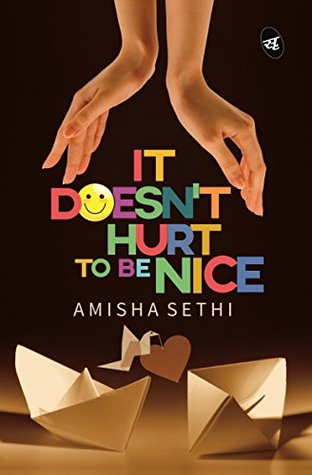
It Doesn't Hurt to be Nice, by Amisha Sethi

Compassion is a virtue that's slowly disappearing from the world, I think, but one that is quite important. Only if you give kindness, will you get it back in return. Perhaps that's the notion that makes the title of this book by Amisha Sethi, "It Doesn't Hurt to be Nice" more appealing. The cover is colorful at best, but doesn't do a lot to make the reader curious.

The book is part fiction - the story of Kiara Seth, and the lessons she learns from her life - and part self-help - for it gives you these lessons to imbue. From the time Kiara is born, to the time she's in college, falls in love, gets married, has kids... and takes a big step in her life. Each chapter focuses on one lesson, and how she came by it. These are quite interesting lessons, but ones that I think, we already know to some extent. What makes it different from other books perhaps is that this story makes it easier to relate to, so we don't stray too far from our lives. It's Kiara's story that keeps the lessons interesting. Another thing I liked were the quotes at the start of the chapters. The illustrations also manage to add a touch of humor in what might tend to be a lesson oriented approach.

Given that it is Kiara's story that keeps it interesting, the lessons that are at the beginning of each chapter don't make as big an impact. They are interesting in the first few chapters, but lose their intensity toward the conclusion. I think the haphazard chronology might be a reason for that. When you see a chapter that has only the lesson, and none of Kiara's story, it shows the hurry, I feel. How the story ends, I feel, doesn't go with what was put across a page ago. It adds to the confusion as well.

The story comes across to the reader well, and the language is not difficult to follow. I cannot say it changed my life, but it has interesting lessons. I'd say it rates somewhere between 3.5 stars and 4 stars, but not quite a 4 star book in my opinion.


3.5 Stars < Rating < 4 stars

Reviewed by: Vinay Leo R.
Genre: Fiction/Self-Help
Publishers: Srishti Publishers & Distributors
Book Source: Publisher

This is not a paid review. The opinions expressed are my own and unbiased.

The Legend of Yuck-Man, by Smarak Swain


Blurb:

Not many years ago, the city was shaken by heinous crimes of all sorts. The mysterious attacker scarred the survivors, and scared the commoners and government alike with his blatant and outrageous acts. He killed at random, committed sexual violence, and kidnapped young women, mostly in crowded public places like restaurants, discotheques, and shopping malls Yet this person remains a mystery. All that the eyewitnesses can say is that this monster looked ugly, smelt repugnant, and was generally loathsome. They swear that this individual had superhuman powers. The Legend of Yuckman narrates the incredible story of this monster. It is a story of conflicts: between greed and hunger, pollution and purity, belief and science, morality and indulgence, and above all, between a man and his demons.


Thoughts:

I honestly have to start trusting my instincts more often. I had a feeling this book might not be one that I could give a proper review on, but the idea seemed incredible, and I was intrigued by that. Turns out, the story wasn't much to my liking. I couldn't really get past the notion itself, that even though the outrageous acts are committed in public, with eyewitnesses, the yuck-man remains a mystery. And though I did muster on, I think the story got a bit too jargon-ed for me to retain complete interest in it. The idea was, I guess, to portray humans in a monstrous skin, but the idea got exaggerated beyond the limits of my liking. It felt like the author was trying to incorporate a lot of things in a single fiction, and got muddled instead with unnecessary details of research work and fights, which diluted the main character itself, unappealing as the name might be. I'd say this book is definitely not to my liking, but the genre being sci-fi with a societal link, it might still find its admirers.

Rating:
2 stars

Genre:
Sci-Fi

Source:
Review copy from author

Reviewed by Vinay Leo R.

Stairway to Nowhere and other stories, edited by Ruskin Bond


I think it's wonderful that you have a story to tell, a few stairs to climb and aspire to reach somewhere. It's in school days that I came to know of my love for poetry writing, and it's wonderful to see there were contests for school kids that helped get their story put to print. Stairs to Nowhere, named so, I guess because quite a few stories in the book are titled thus (or maybe it was the theme given to them) brings out stories from young writers from different schools and from all across India. The stories in the book, reading now, feel average and could use a lot of editing or a bit of complexity, but I think looking at the bigger picture, and who wrote them, the effoert is commendable. Perhaps the presentation could have been nicer too, because it felt like I was reading a school textbook. Not a very memorable book, but one that I did like reading.


Reviewed by: Vinay Leo R.
Genre: Short Stories
Rating: 3 stars

Edgar Allan Poe - The Raven (Review)

To write poetry in itself is no easy task, but to tell a story in verse is, I feel, more difficult. And to tell a horror story in verse, I doff my cap to Edgar Allen Poe. I wouldn’t be able to pull it off. What the book The Raven manages to do is bring a feel of horror to the story. I’ve told before too, when it’s the genre of horror, the reader must be able to get into the skin of the character and feel the chills, and with this poem, Poe manages to successfully do that. He even manages to bring a bit of lightness to the experience, which is remarkable. To step into the man’s shoes, wondering where the knock was, who the visitor might be, and then throwing the door open only to see the empty night outside was brilliant, and then the winged visitor at the window too. The Raven, with just one word, felt a little disinteresting, but it still worked for me. This book was the illustrated version, and the artwork was quite fascinating too, though I think only the verse would still work well to bring the art to the imagination of the reader. If this book is labeled a poetry classic, I have no doubts now why it is so, and why it is so evergreen. An enjoyable read this was, for sure.

Rating: 4 Stars
Genre: Poetry
Source: Own Copy

Reviewed by Vinay Leo R.

The Old Man and his God, by Sudha Murty — a review

Travel brings us experiences. Experiences bring observations on life. And we realize that life may not be as simple as we thought, or maybe it is. Sudha Murty, on her travels, records what people say to her. Their accounts on life and its meaning are put in this book for us to savor.

What she does so wonderfully well as usual is that she narrates without making things complicated. It’s simple in language and style, and very direct. It feels even like they are diary entries, and in a way, they are. The title story, The Old Man and his God looks to bring out the simple needs of an old, blind priest who Sudha Murty finds at a small temple. It brings out that money might not be everything to everyone. The Way You Look at It, the story brings about a look at perspectives. What one person found useful, the other didn’t. The Tale of Two Brothers touched a chord. It showed being related by blood isn’t important as long as you are intrigued by the heart, by love. These were some of my favorites from the book.

Do I agree with how she interprets the observations? Not always, no. But then again, she looks at it one way, and the way I look at the incident would be different after all.

The book is not just enjoyable to read, but also, inspiring with some of the stories in it. I rate it 3.5 or 4 stars.

Rated: 4 stars
Source: Library Copy
Reviewed by: Vinay Leo R.

Fireplay, by Steve P. Vincent

Novellas make for quick easy reads, and this one is no different. This book, Fireplay, is a really short (36 pages) book that is written as a prequel to the first book in the Jack Emery series. It focuses on the Australian journalist Jack Emery, who’s in Afghanistan, in the company of Marines as he works on a cover story. It seems to be going well when they’re attacked by a single soldier. The whys take them to a camp, Camp Navitas, but Emery feels there’s more to the Camp than meets the eye.

The novella is quite thrilling and works well in the short length to keep the flow. Short action scenes, and the characters of Emery and the marine leader Ortiz were interesting. I feel those who have read The Foundation, first book of the series, might find it easier knowing the main character and also the author’s writing style. I, knowing neither, felt like there was something missing. Wasn’t much of a fan of the cover page either.

I’d say this makes for a good fast read to enjoy on a journey of say half hour or less. I’d rate it 3 or 3.5 stars at most.

Rated: 3 stars
Genre: Thriller
Source: Author/PR

Reviewed by Vinay Leo R.

Review: Iliana Xander's 'Love Mom'

  Iliana Xander is making waves globally in the crime fiction genre, and much like Freida Mcfadden and Coolen Hoover (though she is more int...